
No items found.
One of Tulane’s original three buildings is given new life as a center for anthropology.
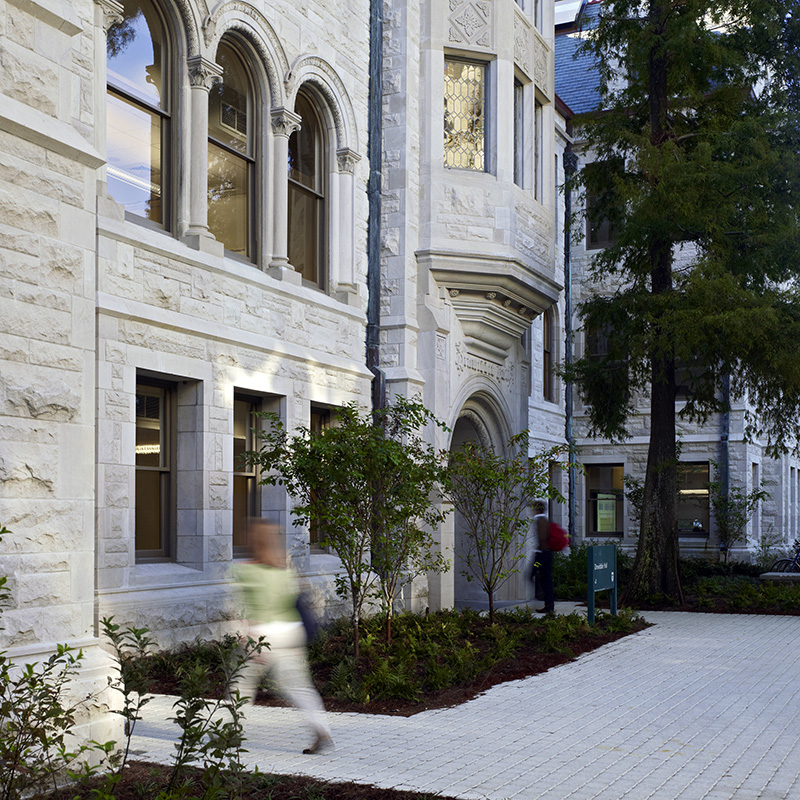
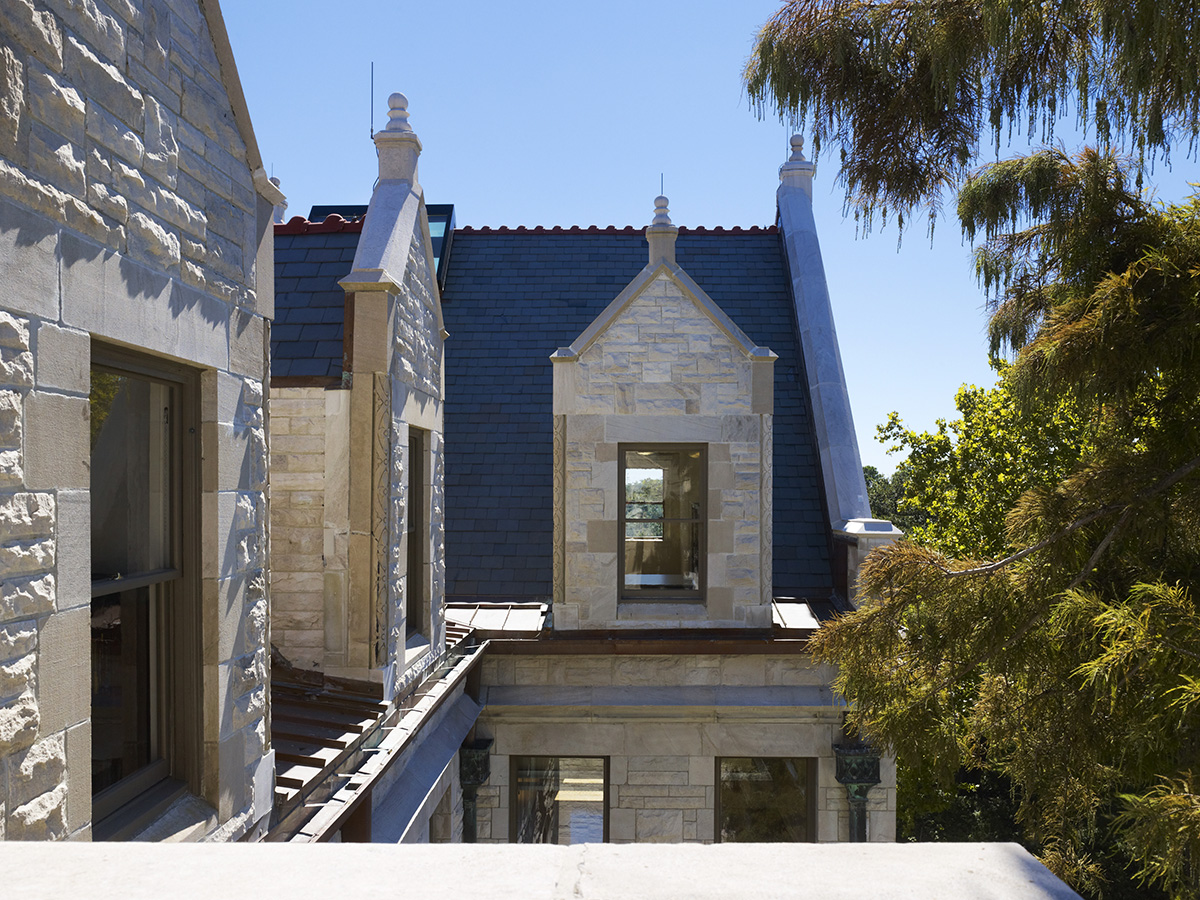
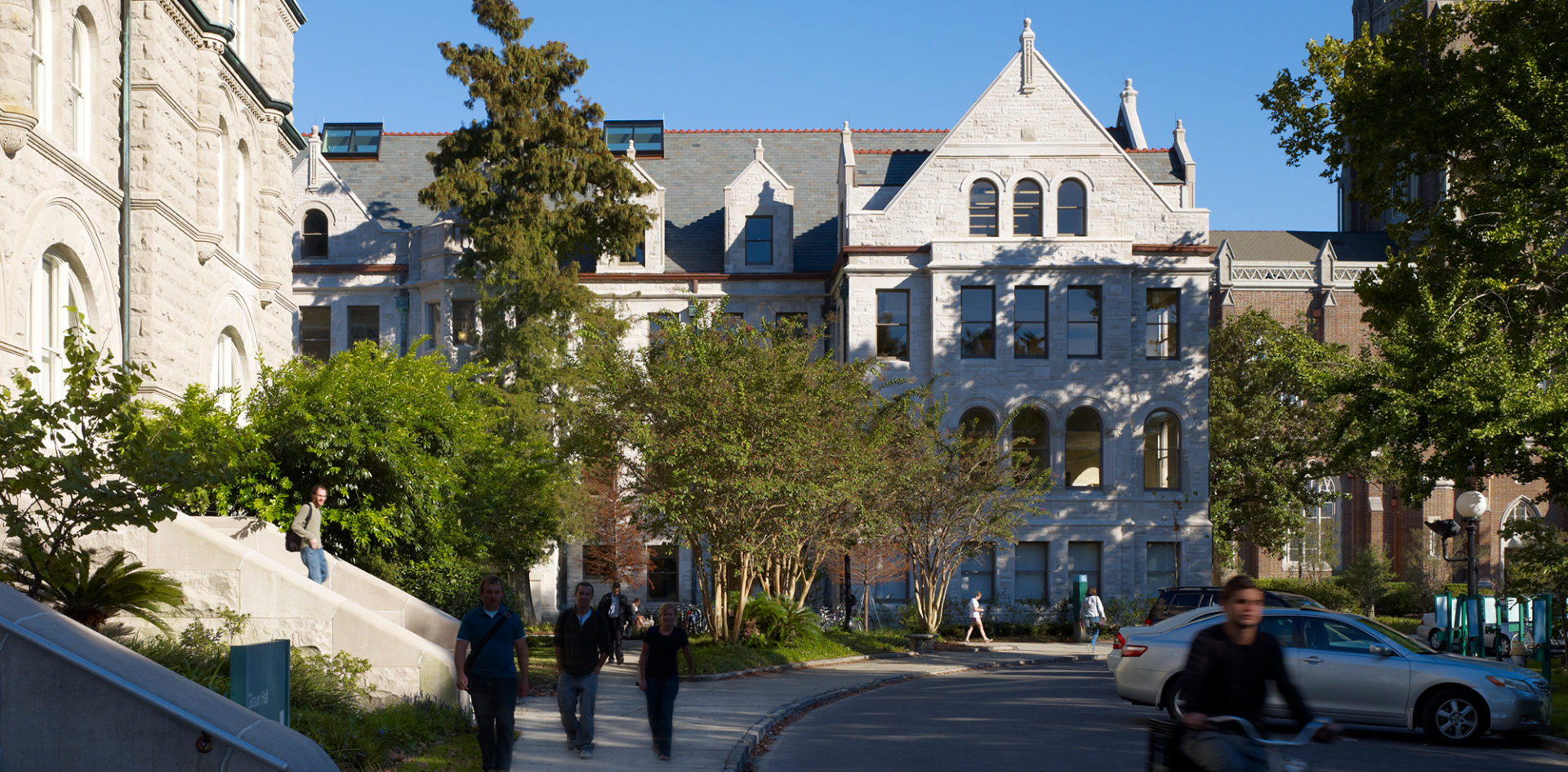
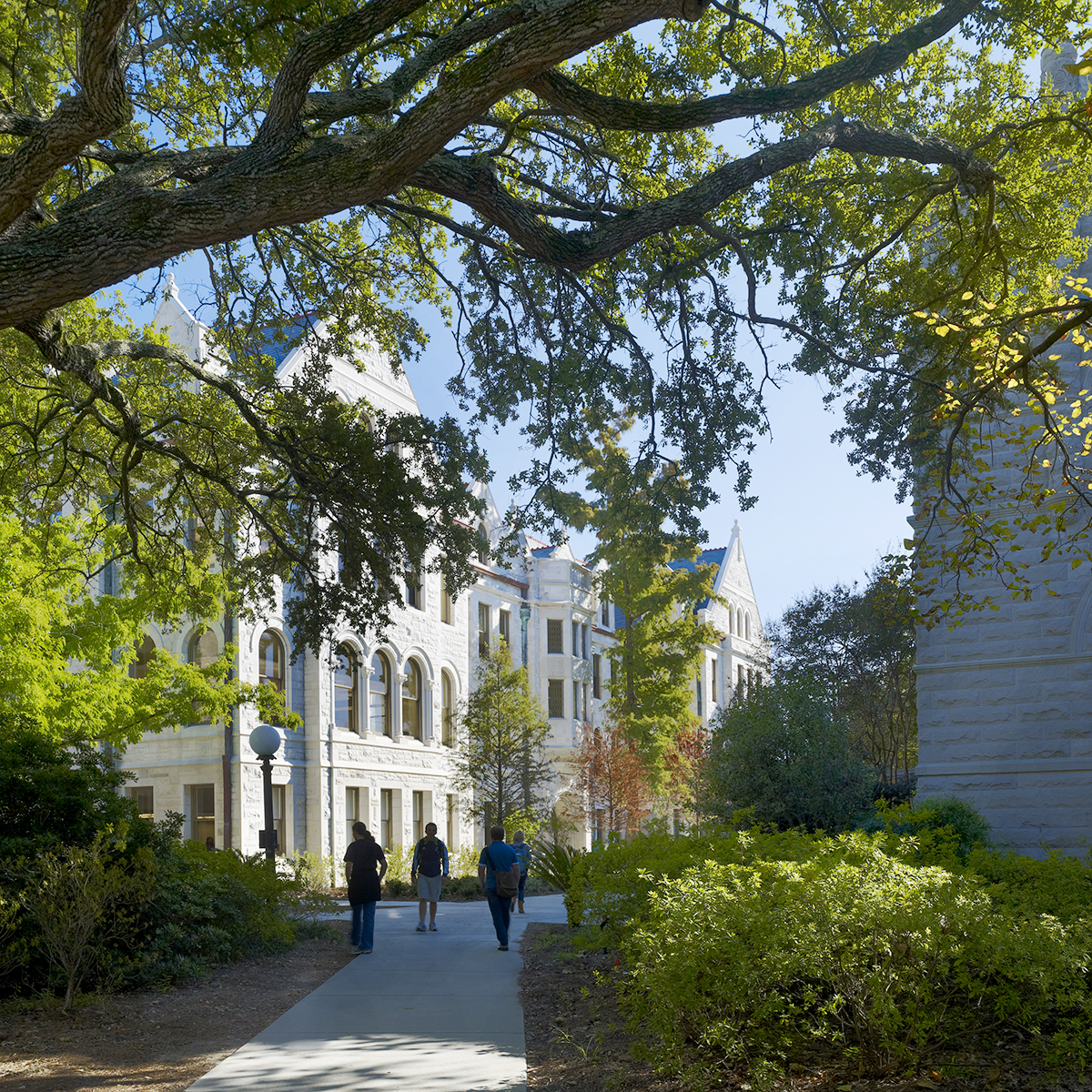
Dinwiddie Hall, facing St. Charles Avenue and the Charles Olmsted-designed Audubon Park, is a four story building with stone facades and a high-pitched slate gable roof, built in the 1920’s in the Richardsonian style. The project brief called for a complete renovation of all components of the building with a particular charge: find a solution for a history of roof leaks that began soon after the building was completed.
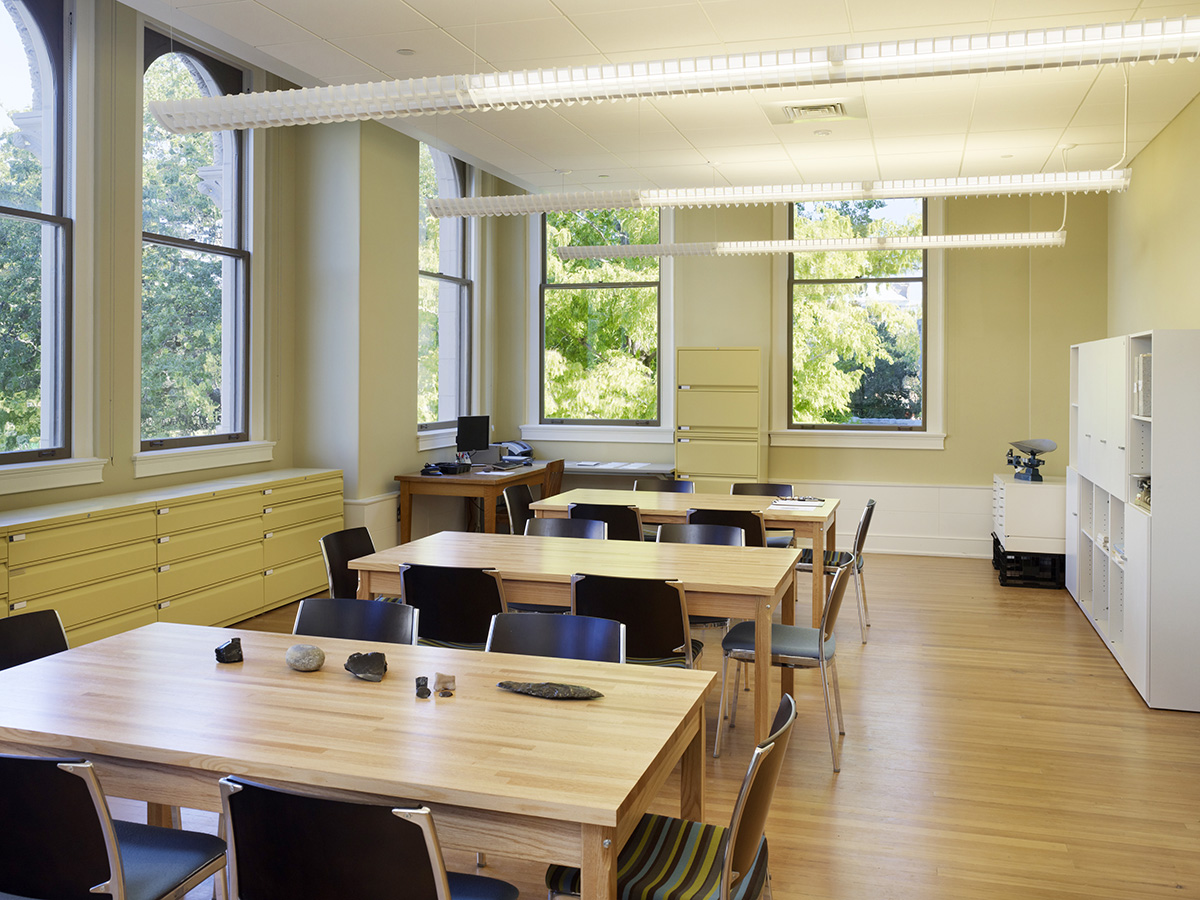
The project encompassed the redesign of the building’s circulation system with new stair towers inserted inside the building envelope at each end of the structure. The design program called for new classrooms, faculty offices, meeting rooms and dry labs for the Department of Anthropology as well as exhibit and collection spaces for the Middle American Research Institute (MARI), which hosts exhibits of ancient and modern indigenous life in Mexico and Central America. The Institute also stewards an extensive collection of textiles and artifacts
from not only from Mexico and Central America, but also the Southwest U.S. and South America.

Code upgrades, including life safety and ADAaccessibility concerns, new heating, ventilating and air conditioning systems, and a complete restoration of the building envelope – including repairs and waterproofing of the exterior stone walls and windows were all designed to meet LEED certification. This was the first LEED Gold certified building on the Tulane Campus, and the first building of its type in Louisiana to receive the LEED credit for recycling 75% of construction waste. Additionally, the project reused 94% of the exterior shell of the building and 51% of the interior doors and transoms. Renovations to Dinwiddie Hall were accomplished for $1M less than budgeted. The long-time Senior Vice President for Finance called this his “favorite project ever” at Tulane.
No items found.
For more Tulane University projects, click here.
Client
The Administrators of the Tulane Educational Fund
Year
2010
Project Area
46,526 SF
Awards
LEED Gold